CUSTOM MANUFACTURING SERVICES

Laser Cutting Services by MS Machining

MS Machining provides custom laser cutting services for prototypes and production parts based on your drawings and technical specifications. We support one-off parts, small batches, and repeat production, with cutting requirements reviewed according to the material, thickness, geometry, and tolerances specified for each project.

Laser Cutting Capabilities for Custom Parts

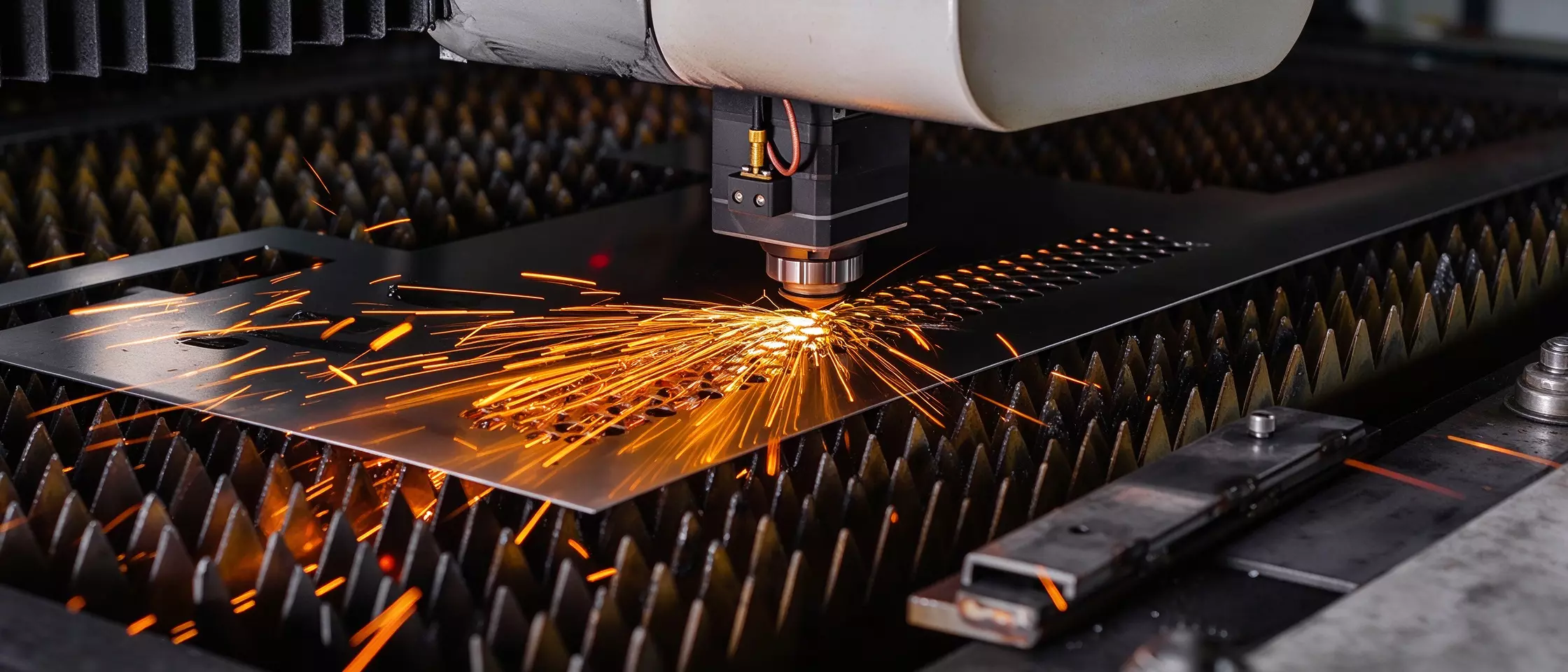
MS Machining provides custom laser cutting services for parts manufactured to customer drawings and specifications. Using fiber, CO₂, and other laser cutting processes, we produce sheet metal components, plate parts, tubes, and structural profiles for prototypes and production orders. The cutting method is selected based on the material, thickness, part geometry, and required edge quality.

Sheet Metal & Plate Cutting

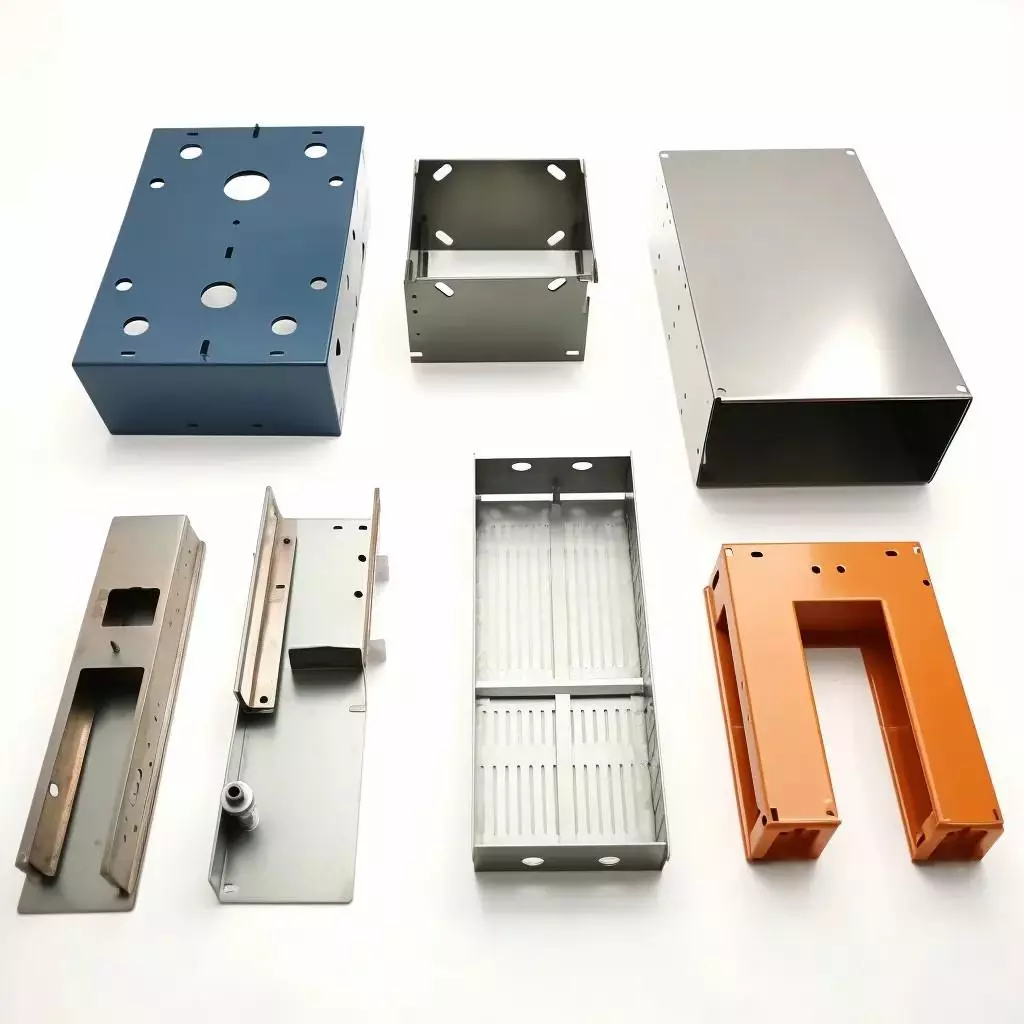
We manufacture flat components with complex external contours, internal openings, mounting holes, slots, and notches. Typical parts include mounting brackets, base plates, machine guards, enclosure panels, equipment covers, and blanks for further fabrication. External profiles and internal cutouts can generally be completed in the same cutting operation when the features are suitable for laser cutting.
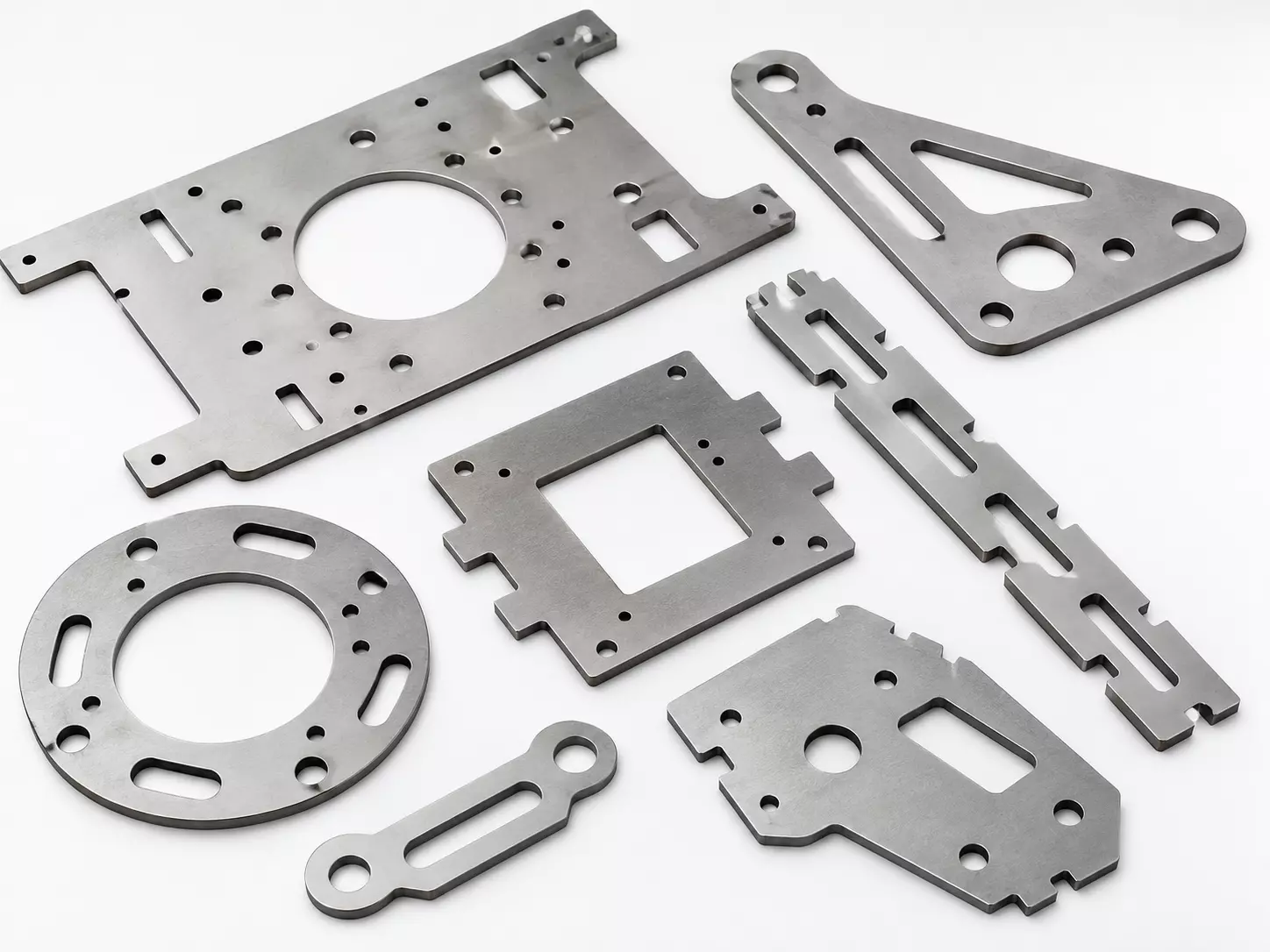
Laser-cut sheet metal components with external contours, holes and slots

Tube & Profile Cutting

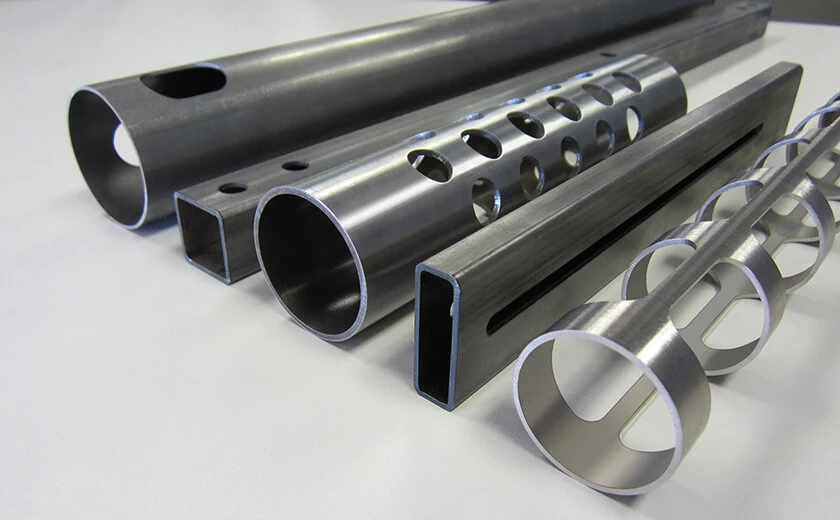
Round, square, and rectangular tubes can be cut with straight or angled ends, contoured joint profiles, cross-holes, and slots. These features are commonly required for machine frames, equipment supports, and welded assemblies. End profiles and mating cutouts can be produced to suit the intended joint configuration.

Laser-cut structural tubes with angled ends, cross-holes and slots

Functional Features & Part Design

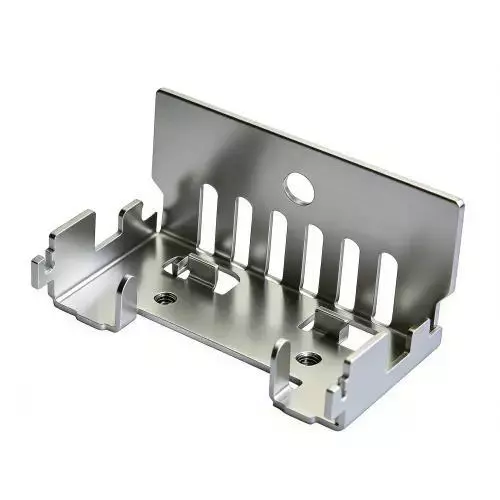
Laser-cut parts can incorporate locating tabs, interlocking slots, bend reliefs, clearance openings, and repeated cutout patterns. These features serve component positioning, fastening, ventilation, and subsequent forming or assembly.

Small holes, narrow slots, and closely spaced features are assessed against material thickness, feature dimensions, and cutting conditions before production. Edge condition and cut quality are also considered for parts requiring subsequent forming, welding, or assembly.

Laser-cut part design with locating tabs, slots, bend reliefs and cutouts

Prototypes & Production Parts

Laser cutting produces custom profiles without dedicated stamping dies, making it suitable for prototypes, low-volume orders, and repeat production. Changes to external contours, hole locations, and cutouts can be incorporated into revised cutting files without new cutting dies.

As a non-contact process, laser cutting avoids direct mechanical cutting forces on the workpiece, although heat-related distortion must still be considered for thin sections and closely spaced features.

For sheet metal production, nesting multiple part profiles on the same sheet can improve material utilization and reduce offcut waste.

LASER CUTTING MATERIALS

Laser Cutting Materials & Thicknesses

MS Machining provides laser cutting services for carbon steel, stainless steel, aluminum alloys, copper, brass, titanium, and selected non-metallic materials. We work with common sheet and plate grades as well as materials specified in customer drawings. Cutting feasibility depends on the material composition, thickness, part geometry, and required edge quality.

Common Materials & Thickness Ranges

The following are reference thickness ranges for commonly requested laser-cut materials. Final availability and cutting limits depend on the equipment, material grade, and part requirements.

Material Common Grades Reference Thickness
Carbon & Mild Steel Q235, Q345, A36, SPCC 1–12 mm
Stainless Steel 304, 304L, 316, 316L, 430 1–12 mm
Aluminum Alloys 5052, 5083, 6061, 7075 1–12 mm
Galvanized Steel SGCC, DX51D+Z 0.8–2 mm
Copper C101, C110, T2 0.8–6 mm
Brass C260, H62 1–6 mm
Titanium Grade 2, Grade 5 1–6 mm
Acrylic (PMMA) Cast, Extruded 1.5–12 mm
Plywood & MDF Laser-Compatible Grades 3–12 mm

Cutting Considerations by Material

Different materials require different cutting conditions, particularly where edge quality, dimensional stability, or subsequent fabrication is important.

Carbon Steel: Oxygen-assisted cutting may produce an oxide layer along the cut edge. Removal may be necessary before welding or certain surface finishes.

Stainless Steel: Nitrogen-assisted cutting is commonly used to obtain edges with minimal oxidation. Cut quality and dross formation depend on thickness and processing conditions.

Aluminum: High thermal conductivity and reflectivity require suitable laser settings. Thin sections and closely spaced cuts may be sensitive to heat-related distortion.

Copper & Brass: Reflective surfaces and rapid heat dissipation make these materials more demanding to cut, particularly at greater thicknesses.

Galvanized Steel: Cutting can damage the zinc coating near the edge. Exposed areas may require additional corrosion protection.

Titanium: Assist-gas selection and heat input must be controlled where oxidation and edge integrity are critical.

Acrylic & Wood-Based Sheets: CO₂ laser cutting is suitable for compatible grades. Edge appearance, discoloration, and charring depend on material type and thickness. Materials that release hazardous decomposition products are excluded.

Material Requirements for Quotation

Please specify the material grade, thickness, applicable standard, and any requirements for surface condition or cut-edge quality in your drawings.

For parts requiring subsequent bending, welding, or finishing, these requirements are considered during material and process selection. Special grades, coated sheets, and customer-supplied materials can be reviewed before quotation. Any proposed material substitution requires customer approval.

SECONDARY PROCESSING & FINISHING

From Laser Cutting to Finished Parts

MS Machining provides secondary processing and finishing for laser-cut components, allowing customers to source finished parts through a single supplier.

Finished laser-cut metal parts with bending, welding, and surface finishing

Deburring & Edge Finishing

Removal of burrs, dross, and sharp edges as required for assembly or finishing.

Bending & Forming

Press brake bending to specified angles and dimensions.

Tapping & Machining

Drilling, tapping, countersinking, and CNC machining for features requiring additional processing.

Welding & Assembly

Joining components according to assembly drawings and welding requirements.

Surface Finishing

Powder coating, anodizing, plating, and passivation, as appropriate for the material and application.

Quality Inspection

Finished parts are inspected against customer drawings and agreed specifications, including critical dimensions, formed features, welds, and surface finish requirements. Inspection reports and material certificates can be provided when specified.

Frequently Asked Questions About Laser Cutting Services

What file formats are recommended for laser cutting?

DXF and DWG files are commonly used for 2D laser-cut profiles. STEP files and dimensioned PDF drawings can provide additional information about part geometry, material requirements, and tolerances.

For accurate quotation and production, drawings should clearly identify the finished dimensions, units, material thickness, and critical features. Files containing open contours, overlapping lines, or duplicate cutting paths may require clarification before manufacturing.

Is there a minimum order quantity for custom laser cutting?

MS Machining supports one-off prototypes, small batches, and repeat production orders. Order feasibility and pricing depend on the material, thickness, part dimensions, cutting complexity, and any additional processing requirements.

For small quantities, material procurement and machine setup may account for a larger proportion of the total cost.

How is the cost of laser cutting services calculated?

Laser cutting costs depend on material type and thickness, part size, cutting path length, number of piercings, order quantity, and required edge quality.

Material utilization also affects pricing, particularly when multiple parts can be nested on the same sheet. Additional operations, inspection requirements, and delivery arrangements are considered separately when applicable.

How long does custom laser cutting take?

Production lead time depends on material availability, part complexity, order quantity, production scheduling, and whether additional operations are required.

Straightforward laser-cut profiles generally require fewer manufacturing steps than parts involving bending, welding, machining, or finishing. The estimated lead time is confirmed after reviewing your drawings and order requirements.

Can I supply my own material for laser cutting?

Customer-supplied materials can be reviewed before quotation. Please provide the material grade, thickness, sheet dimensions, applicable specifications, and any relevant information about coatings or surface condition.

Material condition and suitability must be assessed before cutting. Additional material may be required for machine setup, test cuts, or processing allowances.

Can laser-cut parts require additional machining or finishing?

Yes. Depending on the drawing requirements, laser-cut parts may undergo bending, welding, CNC machining, deburring, or surface finishing.

Features requiring tighter dimensional control, specific edge conditions, or machined mating surfaces may need additional processing after laser cutting. These requirements should be identified during quotation.

How are laser-cut parts inspected before delivery?

Inspection requirements are determined by the customer drawing and the agreed specifications. Depending on the part, inspection may cover overall dimensions, hole and slot locations, profile accuracy, and cut-edge condition.

Critical dimensions and any required inspection documentation should be identified before production so that suitable inspection arrangements can be confirmed.

What information should I provide to request a laser cutting quote?

Please provide your drawings or CAD files, material grade, thickness, part dimensions, required quantity, and expected delivery date.

If applicable, include critical tolerances, surface finishing requirements, inspection documentation, and any subsequent fabrication or assembly operations. Complete specifications help reduce clarification during quotation and allow the manufacturing requirements to be evaluated more accurately.

Scroll to Top

Get in Touch

Tell us what you need manufactured, and our team will review your inquiry and follow up with you.