

Two CNC-machined parts can use the same material and have similar overall dimensions yet receive very different quotations. One may need straightforward milling, while the other includes deep pockets, thin walls, precision bores, or features on multiple faces.
The difference comes from more than the amount of material removed. A CNC machining quote reflects the work required to make acceptable parts: material procurement, programming, setup, machining, finishing, inspection, and delivery requirements. Understanding these seven cost factors can help engineers and purchasing teams review quotations and identify changes worth considering before production.
1. How Does Part Geometry Affect CNC Machining Costs?
Part geometry determines which tools can reach a feature, how material can be removed, and how securely the workpiece can be held. Two components made from the same stock may need very different machining times.
Deep Pockets, Narrow Slots, and Thin Walls
Deep pockets may require long cutting tools. Greater tool overhang reduces rigidity, increasing the risk of deflection and vibration. Smaller cuts, alternative tools, or extra finishing passes can increase machining time.
Narrow slots limit cutter diameter. Smaller tools generally remove material more slowly under comparable conditions, while deep slots can make chip evacuation more difficult.
Thin walls can deflect under cutting or clamping forces and move after material is removed. The machinist may need lighter cuts, additional support, or a revised operation sequence to maintain the specified dimensions.
These features do not automatically make a part expensive. Their cost depends on depth, wall thickness, material, tolerance, and available tooling.
Internal Corners and Tool Accessibility
A conventional cylindrical end mill leaves a radius at internal vertical corners. A very small radius may require a smaller cutter and additional machining time. Where the mating design permits, a larger radius or suitable corner relief can simplify machining.
Features that cannot be reached from the current orientation may also require the part to be repositioned. This introduces handling, alignment, and verification work. Before finalizing a design, review whether difficult-to-access features are functionally necessary and whether their geometry can be adjusted without affecting fit, strength, or assembly.
2. How Does Material Selection Affect Machining Costs?
Material selection affects both the purchase price of the starting stock and the time and tooling needed to machine it. A less expensive alloy does not always produce a less expensive finished part.
Stock Cost and Material Utilization
Stock price depends on grade, condition, product form, dimensions, and quantity. A suitable plate or bar size may reduce the amount of material purchased compared with machining the same component from an oversized block. Uncommon dimensions or material conditions may also involve special orders and longer procurement times.
Material removed as chips matters for two reasons: the manufacturer pays for the starting stock, and the machine must spend time removing the excess. A deeply pocketed component, for example, can require substantially more rough machining than its finished weight suggests.
Machinability and Cutting Time
Different materials place different demands on cutting tools and machine settings. Aluminum 6061 often supports relatively high material-removal rates. Stainless steel 304 has a tendency to work-harden and may require closer control of cutting conditions and tool wear. Titanium Grade 5 presents additional challenges in heat management and tool life.
These are not fixed rankings of part cost. Tool geometry, material condition, feature dimensions, and machining strategy can change the outcome. The relevant question is how the specified material affects cycle time, tool consumption, and process stability for the actual component.
An alternative grade or material may reduce cost, but only after confirming the required strength, corrosion resistance, temperature performance, wear behavior, and other functional properties. Specify the material grade and condition in the RFQ, and identify acceptable alternatives only when engineering requirements permit them.
3. How Do Tolerances and Surface Finish Affect CNC Machining Costs?
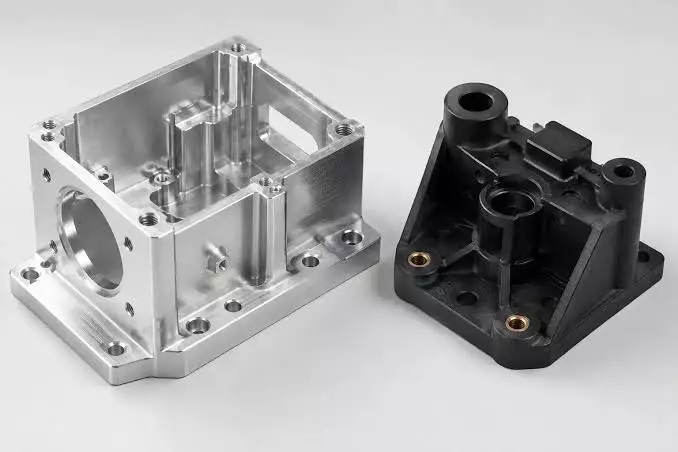
Tighter tolerances and finer surface roughness requirements can increase machining and inspection work. The additional cost depends on the feature, material, accessibility, and whether the specified result can be achieved through the planned operation.
How Tight Tolerances Increase Machining Costs
A tight dimension may require a controlled finishing pass, closer monitoring of tool wear and thermal changes, or more frequent measurement. Narrow acceptance limits can also increase the risk of rework and rejected parts.
For example, holding ±0.01 mm on a straightforward turned diameter may be routine with a stable process. Achieving the same tolerance on a thin-walled milled feature may be harder because of workholding forces and material movement.
Geometric requirements matter too. Flatness, position, perpendicularity, and runout may affect the machining sequence and the way features are measured, even when individual dimensions have relatively broad tolerances.
How Surface Roughness Affects Cost
| Surface roughness | Typical machining considerations |
|---|---|
| Ra 3.2 µm | Often achievable with conventional milling or turning, depending on the feature. |
| Ra 1.6 µm | May require adjusted cutting conditions or a dedicated finishing pass. |
| Ra 0.8 µm | Requires a suitable finishing process; extra operations depend on the material and geometry. |
| Ra 0.4 µm or finer | May require grinding, honing, polishing, or another specialized process. |
A turned surface may achieve Ra 0.8 µm during normal finishing, while a deep or difficult-to-access surface with the same callout may take additional work. Surface roughness and dimensional accuracy are separate requirements: a smooth surface is not necessarily dimensionally accurate.
Specify Precision Where It Matters
A precision bore may need controlled diameter, roundness, and roughness to work with a mating shaft. Those requirements may be achieved in one suitable finishing operation or may call for additional processing, depending on the bore geometry and material.
Apply tight dimensional, geometric, and roughness callouts to features whose function requires them—such as bearing seats, sealing surfaces, and critical fits. Use appropriate general tolerances elsewhere rather than extending the most restrictive limits across the entire part.
4. How Does the Machining Process Affect Total Cost?
The lowest machine hourly rate does not always produce the lowest-cost part. Process selection determines the equipment, programming, setups, and machining operations needed to meet the drawing.
CNC Milling vs. CNC Turning
CNC turning is generally efficient for rotational components such as shafts, bushings, and sleeves. CNC milling is suited to brackets, housings, plates, and non-rotational features.
Some parts need both. A turned shaft with radial holes or flats might be completed on a turning center with live tooling or moved to a milling machine. Live tooling may remove a separate operation, but the appropriate route depends on feature complexity, available equipment, and the work involved.
3-Axis vs. 4-Axis vs. 5-Axis Machining
| Process | Typical applications | Main cost consideration |
|---|---|---|
| 3-axis milling | Plates, brackets, and accessible pockets | Often economical for simple access; additional faces may need more setups. |
| 4-axis milling | Features arranged around a rotational axis | Rotary positioning can reduce manual reorientation. |
| 5-axis milling | Angled features, complex surfaces, and multi-face parts | Fewer setups may offset more demanding programming and machine costs. |
Consider a housing with features on four faces. On a conventional 3-axis machine, accessing those faces may require multiple setups. Suitable 4-axis or 5-axis equipment may reduce the number of clampings and the associated handling and alignment work.
The deciding factor is the total process cost, not the number of machine axes. A simple plate may be most economical on a 3-axis machine; a more complex housing may benefit from multi-axis machining.
5. Why Does Order Quantity Change CNC Machining Cost per Part?
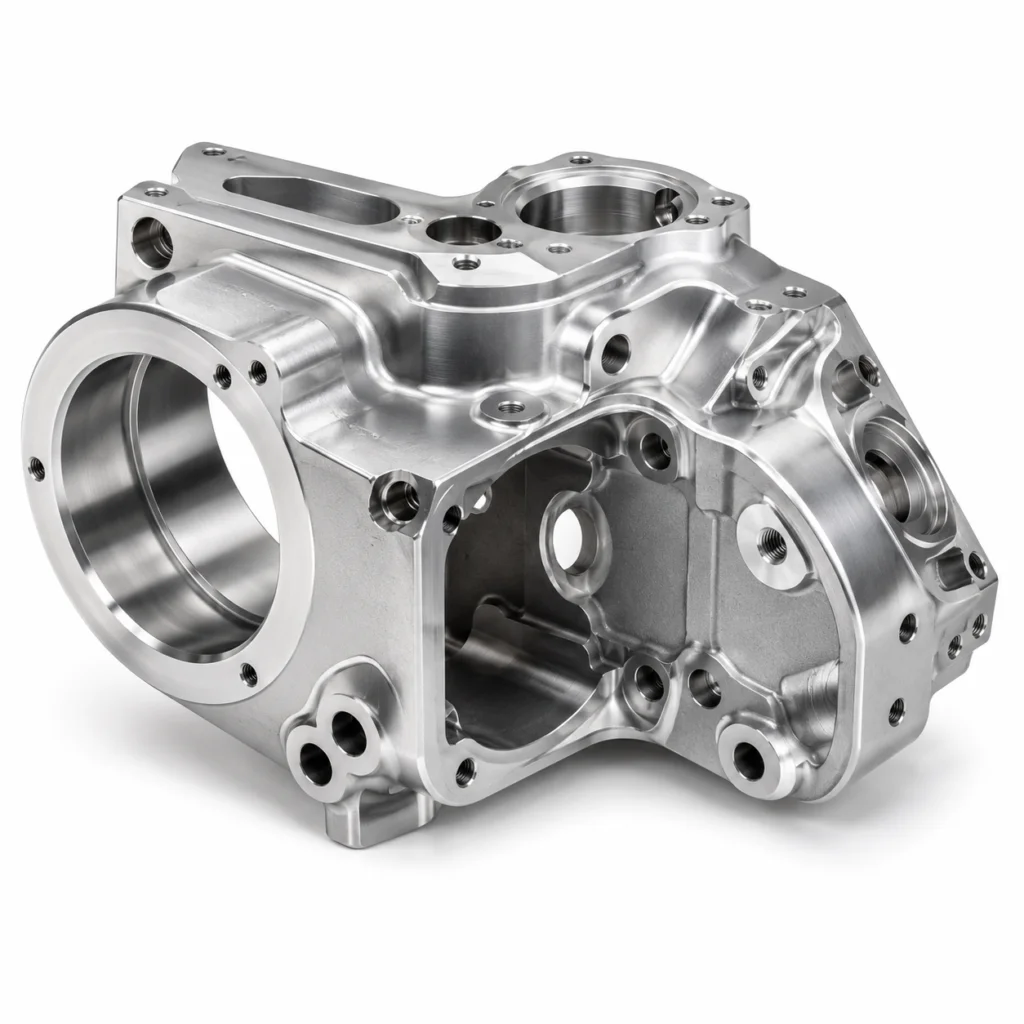
CNC unit costs often fall as order quantity increases because programming, initial setup, and other batch-level expenses are shared across more parts. Material, machining, tool wear, and inspection costs still apply during production, so unit prices do not fall in direct proportion to quantity.
How Setup Costs Are Distributed
Preparing a job involves reviewing the drawing, programming, selecting tools, setting workholding, and checking the initial process. Producing 10 identical parts may require nearly the same initial preparation as producing 100. With 100 parts, those shared expenses are allocated across a larger order.
Additional tools, inspection, or setups may still be needed as the batch grows, so the savings depend on the actual production plan.
How Volume Changes the Production Approach
Larger runs may justify dedicated fixtures, multi-part workholding, optimized toolpaths, or tooling selected for longer production life. These measures can reduce repeated handling or machining time, but their preparation costs may not be worthwhile for a small prototype order.
Repeat orders may also benefit from existing programs and proven workholding. The manufacturer still needs to consider machine setup, material changes, drawing revisions, and required verification.
When a Larger Order Is Not the Better Purchase
A lower unit price can come with higher inventory costs and greater exposure to design changes. If an assembly is still being tested, ordering 100 components instead of the 10 needed for validation may leave unusable stock if a bore or mounting position changes.
For established designs with predictable demand, higher quantities can be economical. For early prototypes, smaller batches preserve flexibility. Ask for pricing at relevant quantity breaks—such as 10, 50, and 100 pieces—and share anticipated repeat demand where known.
6. How Do Finishing and Inspection Requirements Affect Cost?
Post-machining treatments, verification, and quality records can add work beyond cutting the part. Their cost depends on the specified process, the number of features or parts to inspect, and the documents required for acceptance.
Surface Treatments and Secondary Operations
Deburring, bead blasting, anodizing, passivation, electroplating, and powder coating have different preparation and processing requirements. Costs may increase with masking, coating-thickness limits, cosmetic acceptance criteria, or minimum charges for outsourced treatments.
For example, a housing with a standard anodized finish may be relatively straightforward to process. Adding masked threads, controlled appearance, and specified coating thickness introduces preparation and verification work.
Finishing can also affect fit. Anodizing forms oxide partly within and partly above the original aluminum surface; electroplating adds material to the surface. Passivation does not normally create significant dimensional buildup. Critical dimensions may therefore need to be specified and checked in their finished condition.
Inspection Scope and Measurement Requirements
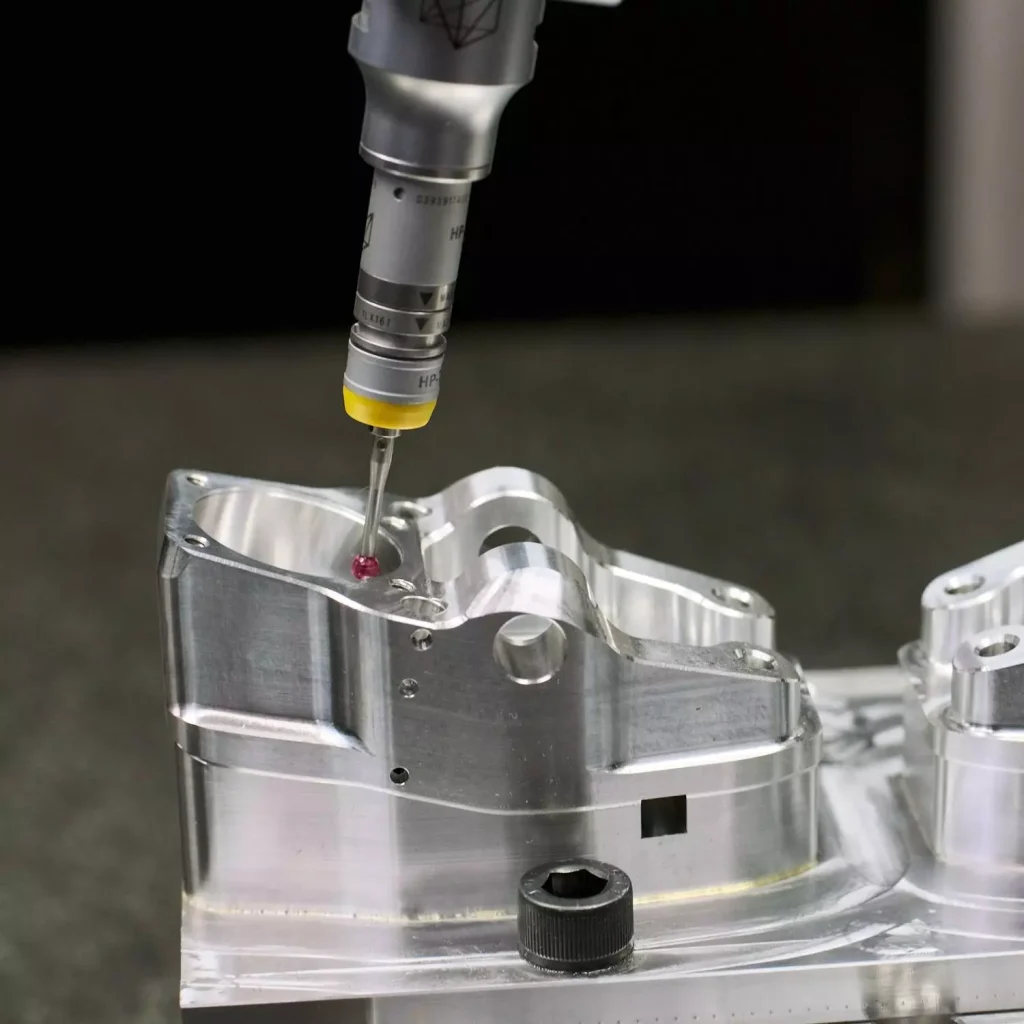
Checking selected dimensions with micrometers or gauges involves different work from inspecting complex geometric features with a CMM, optical system, or specialized gauge. Inspection frequency also matters: first-article checks, agreed sampling plans, and inspection of specified characteristics on every component require different amounts of measurement time.
Inspection should provide sufficient evidence that the parts meet the agreed requirements. Expanding the scope beyond those requirements adds work without necessarily making the manufacturing process more capable.
Quality Reports and Material Traceability
| Documentation | Main cost consideration |
|---|---|
| Dimensional inspection report | Measurement and recorded results |
| First article inspection report (FAIR) | Initial verification and report preparation |
| Material test report (MTR) | Certified material sourcing and traceability |
| Special process certificate | Supplier coordination and compliance records |
Traceability between material batches, finished parts, and inspection records may require additional identification and recordkeeping. State the required finishing, inspection scope, and documentation in the RFQ so these items are included in the quotation from the start.
7. How Do Lead Time and Delivery Requirements Affect CNC Machining Costs?
Lead time includes procurement, programming, machine scheduling, machining, finishing, and inspection. Delivery to the customer adds packaging and transportation. A tighter deadline may change how this work is scheduled and priced.
Standard Production vs. Rush Orders
Rush jobs may require priority scheduling, overtime, expedited purchasing, or changes to existing production plans. These measures can increase costs, although a straightforward part made from available stock may fit into the schedule without a substantial premium.
Material Availability and Outside Processing
Uncommon alloys, non-standard stock dimensions, heat treatment, plating, and other outsourced processes can extend the schedule. Their availability should be checked when the quote is prepared, rather than after machining has started.
Production Completion vs. Delivery
A quoted manufacturing lead time is not necessarily the time until the parts arrive. Packaging, freight, insurance, taxes, and duties may be excluded or allocated according to the agreed commercial terms.
When comparing quotes, distinguish the date parts will be ready for shipment from the required arrival date, and confirm which delivery expenses are included.
How Can You Reduce CNC Machining Costs Without Compromising Part Quality?
Cost reduction is most effective when a design can be adjusted without changing the component’s required function. The following examples are starting points for a design-for-manufacturability (DFM) review, not automatic changes.
| Design feature | Potential adjustment | Check before changing |
|---|---|---|
| Deep pockets | Reduce depth or improve tool access | Clearance, strength, and cavity volume |
| Small internal corner radii | Increase the radius or add relief | Mating geometry |
| Thin walls | Increase thickness or improve support | Weight, stiffness, and fit |
| Tight tolerances on general features | Apply tight limits only where needed | Critical fits and geometric relationships |
| Fine roughness on multiple surfaces | Limit fine finish callouts to functional areas | Sealing, wear, and appearance |
| Difficult-to-machine material | Evaluate an acceptable alternative | Mechanical and environmental requirements |
| Features on multiple faces | Review orientation and tool access | Datums and positional relationships |
A manufacturer can identify possible savings, but changes affecting strength, assembly, sealing, or operating performance require engineering approval. DFM review is most useful before the design and production method are fixed.
Why Do CNC Machining Quotes Differ Between Suppliers?
Two suppliers can quote different prices for the same drawing while both are capable of meeting its requirements. Differences may reflect machine availability, material purchasing conditions, existing fixtures, production experience, and overhead costs. A lower quotation may represent a more efficient process—or a different scope of supply.
When comparing quotes, check that both suppliers have priced the same technical and commercial requirements:
| Item | Confirm |
|---|---|
| Drawing | Same revision, dimensions, tolerances, and GD&T |
| Material | Same grade, condition, and certificate requirements |
| Quantity | Same number of acceptable finished parts |
| Finishing | Same treatments and cosmetic or coating requirements |
| Inspection | Same acceptance criteria and reports |
| Tooling and setup | Whether one-time charges are included or separate |
| Schedule | Comparable completion dates |
| Delivery | Same packaging, freight, and agreed terms |
This comparison is more useful than choosing solely by the quoted unit price, particularly when one supplier includes operations that another lists separately.
What Information Do You Need for an Accurate CNC Machining Quote?
A useful RFQ gives the manufacturer enough information to select a process and price the complete scope of work.
Engineering Information
- 3D CAD model, preferably STEP, and the latest drawing revision
- 2D drawing with critical dimensions, tolerances, GD&T, threads, and surface roughness
- Material grade and required condition
- Identification of functional features and any permitted alternatives
Production and Quality Requirements
- Current quantity and expected repeat quantities, if known
- Required surface treatments and cosmetic specifications
- Inspection scope and documents such as dimensional reports, FAIR, or MTR, where applicable
Commercial Information
- Required production completion or arrival date
- Delivery destination and packaging requirements
- Quantity breaks for comparison, if relevant
A STEP model may be sufficient for an initial feasibility review. A firm quote, however, may need revision if tolerances, surface treatments, inspection, or other requirements are supplied later.
Frequently Asked Questions About CNC Machining Costs
Can a CNC Machining Quote Change After a Drawing Revision?
Yes. Changes to geometry, tolerances, material, finishing, or inspection requirements can affect the manufacturing method. Submit the revised drawing for review before relying on an earlier price.
Are Programming and Setup Costs Charged Separately?
It depends on the supplier. These costs may be included in the unit price or listed as separate one-time charges. Confirm how programming, fixtures, and tooling are handled.
Can I Request Quotes for Different Quantities?
Yes. Requesting prices at practical quantity breaks can show whether a larger order offers worthwhile unit-cost savings. Consider inventory needs and design-change risk as well.
Does the Quote Include Inspection Reports and Material Certificates?
Not automatically. Specify the required inspection reports, first-article documentation, and material certificates before the supplier prepares the quote.
Request a CNC Machining Quote
A reliable CNC machining quotation starts with a clear definition of the part and the work required to deliver it. Geometry, material, tolerance, quantity, finishing, inspection, and delivery requirements should be evaluated together.
Send MS Machining your CAD model, technical drawing, material specifications, required quantity, and critical requirements. We will review the manufacturing scope and prepare a quotation for your project.
Request a Quote